
- Home
- Service & Repair
- Spring Replacement
Torsion and Extension · Oconomowoc, WI
Garage Door Spring Replacement in Oconomowoc, WI
Springs do the heavy lifting on a garage door. The opener only guides it. When a spring breaks, the door becomes dead weight that can be several times heavier than you expect. We replace broken springs across Oconomowoc with springs sized to your door, then balance it so it moves the way it should.
- Same-day service
- Price before we start
- Safety-tested
- Call EarlySame-day visits
- UpfrontPrice before work
- LocalLake Country team
How Springs Work
Torsion or Extension, Each Has Its Own Job
There are two main spring systems on residential doors. Torsion springs mount on a steel shaft above the door opening. As the door closes, cables wound on drums at each end of the shaft twist the springs and store energy. When the door opens, the springs unwind and turn the shaft, lifting the door through the cables. A well-balanced torsion system makes even a heavy door feel light by hand.
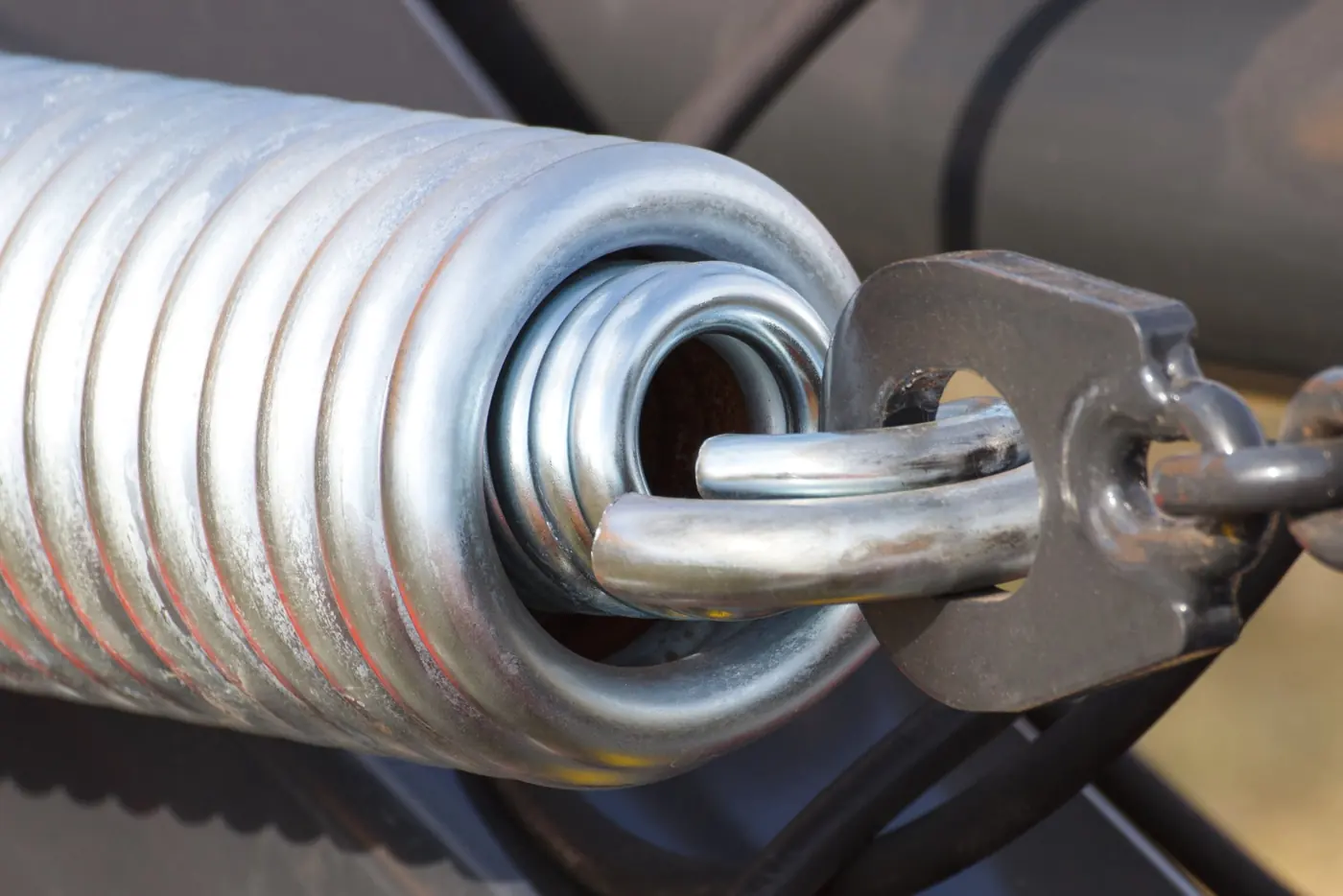
Extension springs run along the horizontal tracks on each side of the door, usually above the upper track. They stretch as the door closes and pull back as it opens, working through a set of pulleys and cables. Extension springs are common on older homes and some single-car doors. They should always have a safety cable threaded through the center, so that if a spring breaks it cannot whip across the garage.
Both systems are under heavy tension whenever the door is closed. That stored energy is why spring work is dangerous without the right tools, training and procedure. Please do not attempt to adjust, loosen, or remove springs yourself.
- Torsion springs: mounted on a shaft above the door
- Extension springs: stretch along the side tracks
- Both store energy when the door is closed
- Extension springs need containment safety cables
- Spring size is matched to door weight and height
Cycle Life
Why Springs Wear Out Even on Good Doors
Every spring is rated for a certain number of cycles. One cycle is the door going up and coming back down. Standard springs are built for a set cycle life, and higher-cycle springs use different wire and sizing to last longer. Once a spring reaches the end of its life, the steel fatigues and eventually cracks, usually with a loud bang.
How fast you reach that point depends on how you use the garage. A household that uses the garage door as the main entrance, with several drivers coming and going, might put many cycles on the door each day. A lake cottage that is opened only on summer weekends uses far fewer. Kids grabbing bikes, trips to the trash bins, and letting the dog out all count.
When we replace springs, we ask how your family uses the door. If it is the main way in and out of the house, a higher-cycle spring can be a better value over time. If the door sees light use, a standard spring sized correctly will serve well. We explain the options and let you choose.
Replace in Pairs
Why We Recommend Replacing Both Springs
Many doors have two springs, either two torsion springs on one shaft or one extension spring on each side. When one breaks, the other is usually the same age and has gone through the same number of cycles. It is often close behind. Replacing only the broken spring means a second service call in the near future and a door that may be slightly out of balance in the meantime.
Replacing both springs at once keeps the lifting force even across the door, which protects cables, drums and the opener. It also lets us size both springs properly for the door's current weight. That matters because doors gain weight over time. Added insulation, a new window section, paint, or moisture in an older wood door all change what the springs need to carry.
Some doors use a single torsion spring. On those, we check whether a single spring is still the right setup for the door's weight or whether converting to two springs would give smoother, more reliable lifting. We recommend it only when it makes sense, and we quote the price before work starts.

What To Look For
Signs of a Broken or Failing Spring
A Loud Bang With No Cause
A torsion spring that breaks makes a sharp, loud bang, often compared to a gunshot or a heavy object falling. If you heard it from inside the house and the door now will not lift, the spring is the first thing to suspect.
Visible Gap in the Spring
Look at the torsion spring above the door from a safe distance. A broken spring usually shows a clear gap of a few inches where the coils have separated. Do not touch it or try to close the gap yourself.
Door Only Lifts a Few Inches
Openers have a safety limit and stop when the load is too heavy. If the door rises a few inches and stops, or the opener strains and reverses, it is likely trying to lift a door whose spring has failed.
Door Slams Shut Quickly
Springs slow the door as it closes. A door that drops fast or slams onto the floor has lost spring support. This is dangerous for anyone standing nearby and for the door's bottom section and the opener.
Stretched or Sagging Extension Spring
On doors with side-mounted extension springs, one spring may look longer than the other or hang loosely when the door is open. That points to a broken or worn-out spring. Check that safety cables are in place and call for service.
Door Feels Heavy or Uneven
With the opener disconnected and the door closed, it should lift easily. If it feels very heavy, rises unevenly, or will not stay put halfway, the springs are weak or out of balance and need professional attention.
Our Process
How We Handle Spring Replacement
- 1
Describe the Symptoms
Tell us what you heard and what the door is doing now. If it is safe, a photo of the springs helps us bring the right sizes. Call early and we can often visit the same day.
- 2
Weigh and Measure
We identify the spring system, measure the existing springs, and assess the door's real weight and height. That tells us exactly what spring size and cycle rating your door needs today.
- 3
Quote the Options
We quote the price before work starts, including the choice between standard and higher-cycle springs and whether replacing both springs is recommended. You decide what fits your household and budget.
- 4
Install, Balance, Test
We install the springs with proper tools, balance the door by hand, inspect cables and bearings, lubricate moving parts, and test the opener's force and auto-reverse through several full cycles.
Balancing the Door
A New Spring Is Only Half of a Proper Spring Job
Installing a spring is not the end of the job. The door must be balanced so the springs hold almost all of its weight through the full range of travel. We check this with the opener disconnected. A balanced door lifted halfway should stay close to where it is placed. If it drifts down, it is under-sprung. If it floats up, it has too much tension.
An out-of-balance door forces the opener to make up the difference, which shortens the life of the motor and drive gear. It also loads the cables and bottom brackets unevenly. After balancing, we inspect the cables, drums, center bearing and end bearings, since a spring failure can shock those parts. We lubricate the springs and bearings, reconnect the opener, and confirm the force and reversing settings so the door stops and reverses properly.
Spring Safety
Please Leave This Job to a Trained Technician
Spring replacement is one of the few home repairs where a mistake can cause a serious injury in a fraction of a second. Winding bars that slip, set screws that let go, or a spring released under tension can strike with enough force to break bones. Online videos make it look routine because they leave out what happens when it goes wrong.
If you suspect a broken spring, stop using the opener, keep the door closed if it is closed, and call us. We offer same-day service when you call early, carry common spring sizes on the truck, and size specialty springs for tall or heavy doors. It is the safest and usually the quickest way to get your Oconomowoc garage working again.

Local Know-How
Why Oconomowoc Springs Break on Cold Mornings
Ask anyone who has lived in Oconomowoc through a few winters and they can tell you springs break when it gets bitterly cold. The area has seen record lows far below zero, and steel loses some of its flexibility in deep cold. A spring near the end of its cycle life often survives autumn, then fails on the first frigid morning lift. Road salt and lake humidity add surface rust that creates weak spots in the coils. Unheated detached garages at older properties around Lac La Belle and Oconomowoc Lake take the brunt of it. Newer homes at Pabst Farms with tall, insulated three-car doors carry heavier springs that need exact sizing. A fall inspection is the best way to catch a tired spring before it leaves you stuck.
Spring Replacement FAQ
Questions About Spring Replacement
Answers from the technicians who do this work across Oconomowoc every week.
Ask A Technician01How long do garage door springs last?
Spring life is measured in cycles, with one cycle being a full open and close. How long that takes in years depends on how often your household uses the door. A garage used as the main entrance wears springs out much faster than one opened a few times a week. Higher-cycle springs are available for busy households and we can explain the trade-off on site.
02Should I replace both springs if only one broke?
In most cases, yes. Springs installed together have the same age and cycle count, so the second one is usually close to failing as well. Replacing both keeps the lifting force even, protects the cables and opener, and avoids a second service call soon after. We quote the price for both options before work starts so you can choose.
03Can I open my garage door with a broken spring?
It is not recommended. Without spring support, the door can be extremely heavy and may drop suddenly. Running the opener against it can strip gears or bend the top panel. If you must get a car out, call us first. We offer same-day service when you call early and can open the door safely.
04What is the difference between torsion and extension springs?
Torsion springs sit on a shaft above the door and twist to store energy. Extension springs run along the side tracks and stretch. Torsion systems generally give smoother, more controlled lifting and are common on newer doors. Extension springs are found on many older and lighter doors and must have safety cables to contain them if they break.
05Why did my spring break in winter?
Cold weather does not create a weak spring, but it often finishes one off. Steel is less forgiving at low temperatures, and the first morning lift puts full load on a spring that may already have fatigue cracks or rust. That is why Lake Country sees so many spring calls during the first cold snaps of the season.
06Can I adjust spring tension myself if the door feels heavy?
No. Spring adjustment involves stored energy that can cause severe injury if a tool slips or a fitting lets go. If your door feels heavy, drifts down, or rises on its own, call for service. We will measure the springs, check the door's weight, and balance it safely with the proper tools.

Oconomowoc Garage Door
Broken Spring? We Can Help Today
Keep the door closed, stop using the opener, and call us. We replace torsion and extension springs across Lake Country, offer same-day service when you call early, and quote the price first.
More Services
Other Ways We Help Oconomowoc Homeowners
Cable Replacement
Frayed or snapped lift cables replaced and wound evenly so the door rises level.
Learn more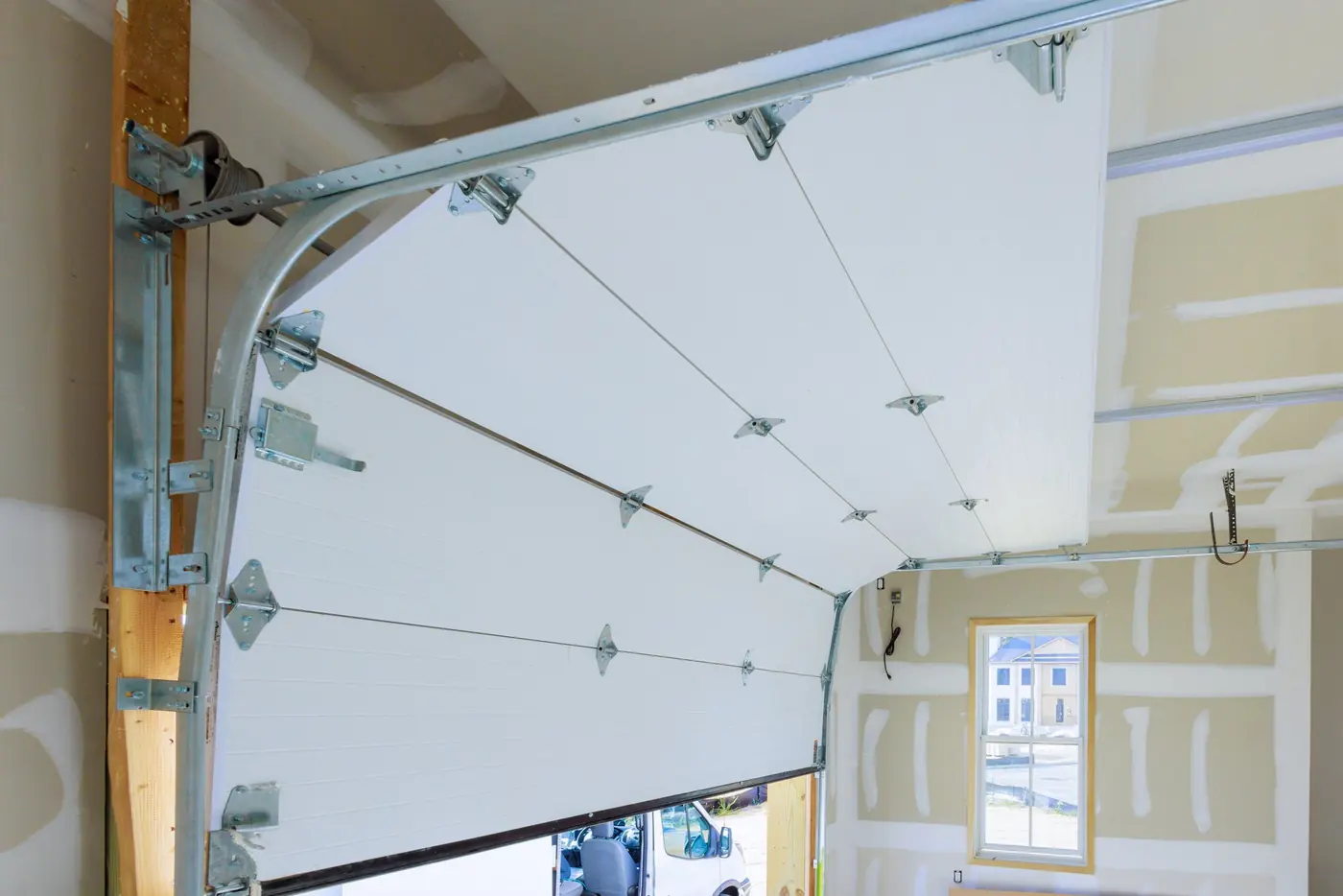
Roller Replacement
Sealed-bearing nylon rollers that end the grinding and take strain off your opener.
Learn more
Panel Replacement
Dented or cracked section? We match the panel and restore a straight, sealed door.
Learn more