
- Home
- Service & Repair
- Drum Replacement
Torsion System Repair · Oconomowoc, WI
Garage Door Drum Replacement in Oconomowoc, WI
Cable drums sit at each end of the torsion shaft above your garage door and wind the lift cables as the door rises. When a drum cracks, wears or slips, the door can lift crooked or drop a cable. We replace drums for Oconomowoc homeowners, match them to your lift type and rebalance the system properly.
- Same-day service
- Price before we start
- Safety-tested
- Call EarlySame-day visits
- UpfrontPrice before work
- LocalLake Country team
How Drums Work
Where The Spring's Force Meets The Cables
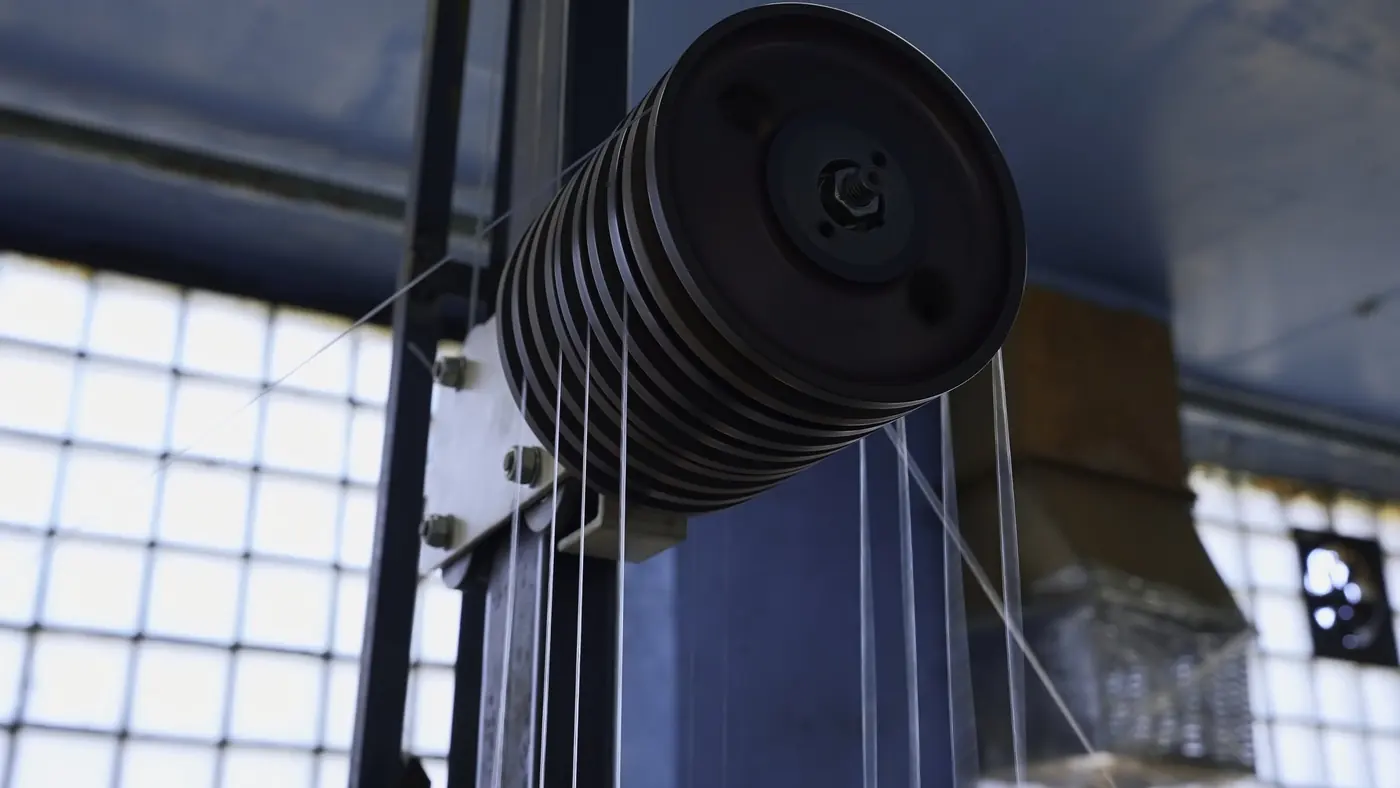
If your garage door has a torsion spring, there is a steel shaft running across the top of the door with the spring wrapped around it. At each end of that shaft sits a cable drum, a grooved spool usually made of cast aluminum. A lift cable runs from the bottom bracket on each side of the door, up alongside the track, and wraps into the grooves on the drum. When the spring turns the shaft, both drums turn with it and wind the cables evenly, lifting the door.
That makes the drums the hand-off point between the spring and the door. The spring stores the energy, the shaft carries it across, and the drums turn that twisting force into a straight upward pull on each cable. For the door to rise level, both drums have to be the same size and type, fastened tightly to the shaft and wound with the same cable length and tension. If anything about one drum is off, one side of the door lifts differently from the other.
Drums are held on the shaft by set screws that bite into the steel. The cable end anchors into a slot or pocket on the drum, and the grooves guide each wrap of cable so it stacks neatly instead of piling on itself. It is a simple part, but it carries the full lifting force of the spring every time the door moves, and the whole system depends on it staying put.
Drum Types
Standard, Low-Headroom And High-Lift Drums
Drums are not one size fits all. A standard-lift door uses a standard drum with a consistent diameter, sized to the door height. A door that is seven feet tall and one that is eight feet tall need different drum sizes, because the drum has to wind enough cable to bring the door all the way up. Tall doors, like the eight-foot and taller doors common in newer homes, often use larger standard drums or a different model entirely.
High-lift doors use a very different drum. Because the door travels straight up a long vertical track before curving back, the drum has a tapered or stepped section. During the first part of the lift the cable winds on the smaller part of the drum, and as the door moves higher the cable moves onto the larger diameter. That changing diameter keeps the spring's force matched to the door's weight through a longer travel. Vertical-lift doors take this idea even further with a large cone-shaped drum.
Low-headroom systems may use drums mounted at the back of the horizontal track instead of over the door, with the cable routed differently. Putting the wrong drum on a door changes how much force the spring delivers at each point in the travel, which can make the door slam, drift or refuse to stay open. We match the replacement drum to your door height, lift type and spring setup instead of grabbing whatever fits on the shaft.
- Standard drums sized to door height
- Larger drums for tall doors
- Tapered high-lift drums for extended vertical travel
- Cone-shaped drums for full vertical-lift doors
- Rear-mounted drums on some low-headroom systems
- Left and right drums installed on the correct ends
What Goes Wrong
Worn Grooves, Cracks And Slipping Drums
Cast aluminum drums are strong, but they do wear. The most common problem we see is worn or chipped grooves. Over thousands of cycles the steel cable rubs the edges of the aluminum grooves, and the rim of the drum can chip if a cable ever came off and was rewound under load. Once the grooves are damaged, the cable no longer tracks neatly. It can ride up on itself, wind unevenly or jump off the drum altogether.
Drums can also crack. A crack usually starts near a set screw or the cable anchor point, where the stress is highest, and it may be hard to see until it opens up. Cold weather, an old drum and a door that has been run with a slack cable all make cracks more likely. A cracked drum can let go suddenly, which drops that side of the door and leaves the other side hanging.
The third failure is slipping. If a set screw loosens or a drum's bore wears, the drum can rotate on the shaft instead of turning with it. The cable on that side unwinds slightly, and the door lifts crooked. Slipping drums often show up after someone has tried to adjust a door themselves, but they can also develop over time from vibration. Re-tightening a worn drum rarely holds, and replacement is usually the right repair.

What To Look For
Signs Of A Drum Problem
Door Lifts Unevenly
If one side of the door starts rising before the other, or the door tilts as it moves, a drum may be slipping on the shaft or a cable may be winding unevenly. Stop using it, since the problem tends to get worse quickly.
Cable Off The Drum
A cable that has jumped the grooves or is hanging loose next to the drum is a serious warning sign. The door is no longer supported evenly and can drop. Keep clear, unplug the opener and call for service.
Cable Piling Up
Look at the drums with the door open. Cable should sit neatly in the grooves. If it is stacking on top of itself, crossing over or bunched at one end, the grooves may be worn or the cable tension may be off.
Chips Or Cracks Visible
Look for chipped edges along the drum rim, worn-down grooves or hairline cracks near the set screws. Aluminum drums can fail suddenly once cracked, so any visible damage is a reason to have the system inspected.
Gap At One Corner
A closed door that leaves daylight at one bottom corner may have a drum or cable issue on that side. It also lets cold air, water and rodents in, which is more of a concern through a long Wisconsin winter.
Clunking During Travel
A clunk or jolt as the door opens can mean a slack cable suddenly catching on the drum. It is often a sign of a slipping drum or stretched cable, and it puts shock loads on the spring, shaft and bottom brackets.
Our Process
How We Handle Drum Replacement
- 1
Inspect The Lift System
We check both drums, both cables, the spring, shaft bearings, bottom brackets and track. This tells us whether the drum is the cause of the problem or one part of a larger issue.
- 2
Match And Quote
We identify your door height, lift type and drum model, then quote the correct replacement drums and any cables needed. You get a clear price before work starts and can decide on extras separately.
- 3
Release And Replace
We secure the door, safely release spring tension, remove the old drums and cables, and install the new matched pair with each cable wound evenly and the drums set firmly on the shaft.
- 4
Rewind And Balance
We rewind the spring to the correct turns, confirm the door balances by hand, watch the cables wind cleanly and test the opener and safety reversal before we leave.
Uneven Lift
Why One Side Rises Before The Other
An uneven door is the clearest symptom of a drum problem. You may notice the door starts to rise on one side first, closes with a gap at one corner, or racks in the opening so it rubs on the weatherstrip. Some homeowners hear a clunk as the slack side catches up. A door that keeps running this way twists its sections and hinges and puts extra load on the side that is doing more of the lifting.
Drums are not the only possible cause. A frayed or stretched cable, a bent track or a bottom bracket that has come loose can produce similar symptoms. That is why we look at the whole lifting system: both drums, both cables, the bearings at each end of the shaft, the center bearing, the spring and the track. Replacing a drum without addressing a stretched cable, or the other way around, usually means the door is crooked again before long.
In most cases we recommend replacing drums and cables together and replacing drums in matched pairs. A new drum next to a worn one has different groove depth and may wind cable at a slightly different rate. Matching parts on both sides is the most reliable way to get a door that rises level and stays that way. If only one side really needs work, we will tell you, and we price the options so you can choose.
Safety First
Why Drum Work Belongs With A Technician
Replacing a drum means fully releasing the tension on the torsion spring, removing the cables, sliding the drum off the shaft and then rewinding the spring to the correct number of turns afterward. A wound torsion spring stores enough energy to break bones, and the drums and set screws are what hold that energy in check. Loosening a drum set screw while the spring is wound can let the shaft spin violently. Please do not attempt this, and do not try to tighten a slipping drum yourself.
Our technicians use proper winding bars, secure the door before releasing tension and follow a set order of steps every time. Once the new drums are on, we wind each cable with even tension, set the drums firmly on the shaft and rewind the spring. Then we check that the door is balanced, meaning it holds steady when lifted partway by hand instead of shooting up or dropping.
Before we leave we run the door through several full cycles, watch both cables wind cleanly into the grooves, confirm the door lands level on the floor and test the opener's safety reversal. If we notice the spring itself is near the end of its life or the shaft bearings are worn, we let you know and quote it, so you can decide whether to handle it during the same visit.

Local Know-How
Cold Snaps, Tall Doors And Oconomowoc Drums
Oconomowoc winters are hard on the lift system. Temperatures that have reached far below zero make aluminum and steel less forgiving, and an aging drum with a small crack is more likely to fail on a frigid morning. Humid lake summers near Lac La Belle, Fowler Lake and Oconomowoc Lake add moisture that rusts set screws and cable ends, especially in older detached garages. Newer homes at Pabst Farms and in growing parts of Summit and Delafield often have tall doors and high ceilings, so we see more large standard drums and high-lift drums there. Homeowners who convert to high-lift for car lifts or storage need the correct tapered drums, and getting that match right is a big part of this work.
Drum Replacement FAQ
Questions About Drum Replacement
Answers from the technicians who do this work across Oconomowoc every week.
Ask A Technician01What does a garage door cable drum do?
The drums sit at each end of the torsion shaft above the door. When the spring turns the shaft, the drums wind the lift cables and pull both sides of the door upward evenly. They are where the spring's twisting force becomes lifting force. If a drum slips, wears or cracks, the door can lift crooked or lose support on one side.
02Can I tighten a loose drum myself?
We strongly advise against it. The drum set screws hold back the energy of a wound torsion spring. Loosening one, even briefly, can let the shaft spin with enough force to cause serious injury. A drum that has slipped also usually needs the cable reset and the spring tension adjusted, which is work for a trained technician with the right tools.
03Should both drums be replaced at the same time?
In most cases, yes. A new drum and an old drum can have different groove wear, which makes the cables wind at slightly different rates and the door lift unevenly. Replacing both keeps the sides matched. We also usually recommend new cables at the same time, since old cables are often worn where they wrap the drum.
04Why does my high-lift door need special drums?
High-lift doors travel much farther up the wall before turning back, so the spring has to deliver force differently through that longer travel. High-lift drums have a tapered or stepped section that changes the cable's winding diameter as the door rises. Using a standard drum on a high-lift door throws the balance off and can make the door unsafe.
05Is a drum problem the same as a broken cable?
They are related but different. A broken or frayed cable is a cable problem. A drum problem means the spool the cable winds on is worn, cracked or slipping. One often causes the other, since a damaged drum wears cables and a slack cable can chip a drum. We inspect both and explain which parts actually need replacing.
06Does my garage door have drums?
If your door uses a torsion spring mounted on a shaft above the door, it has cable drums at each end of that shaft. Doors with extension springs running along the horizontal tracks use pulleys instead of drums. If you are not sure which system you have, describe it when you call and we can usually tell you.

Oconomowoc Garage Door
Door Lifting Crooked?
Call Oconomowoc Garage Door to have your cable drums inspected and replaced. We quote the price before work starts and offer same-day service when you call early, so your door lifts level again.
More Services
Other Ways We Help Oconomowoc Homeowners

Garage Door Installation
New insulated doors measured, installed, sealed and balanced, with the old door hauled away.
Learn more
Garage Door Materials
Steel, wood, composite, aluminum and glass, with straight talk on what survives Wisconsin.
Learn more
Garage Door Styles
Raised panel, carriage house, modern flush or full-view glass, matched to your home.
Learn more